
Mahāsuka Jātaka
Mahāsuka Jātaka
In the ancient city of Mithila, nestled amidst lush gardens and bustling marketplaces, lived a king renowned for his wisdom and benevolence. His name was King Vidhuratha, and he ruled his kingdom with a heart full of compassion, always striving for the welfare of his subjects. One day, a peculiar event occurred that would test the very foundations of his just rule. A wandering ascetic, known for his uncanny predictions and mystical powers, arrived at the palace gates. He was a man of few words, but his presence radiated an aura of profound knowledge.
The King, ever eager to learn from wise men, granted the ascetic an audience. As the sage knelt before the throne, his eyes, ancient and piercing, met the King's. "Your Majesty," the ascetic began, his voice a low rumble, "I have come to impart a prophecy that carries both great fortune and immense peril. In your kingdom, a treasure of unparalleled joy will soon be discovered. It is a treasure that will bring bliss to all who behold it, a joy so profound it is said to eclipse all earthly pleasures. However," the ascetic paused, his gaze unwavering, "this treasure is guarded by a creature of immense power and cunning. To obtain it, one must possess not only courage but also an unshakeable resolve and the wisdom to discern true happiness from fleeting pleasure."
The King, intrigued and a little apprehensive, asked, "Where lies this treasure, and what is this creature that guards it?"
The ascetic smiled, a rare, enigmatic expression. "The treasure is not buried in the earth, nor hidden in a mountain cave. It resides within the hearts of men, a potential for boundless joy that is often overlooked. The guardian is not a beast of fang and claw, but the insatiable desires and illusions that cloud the mind. The creature is the mind itself, when it becomes enslaved by craving and attachment."
The King pondered these words, finding them both perplexing and insightful. He thanked the ascetic and dismissed him, but the prophecy lingered in his thoughts. He began to observe his people more closely. He saw their constant striving, their endless pursuit of wealth, power, and sensory gratification. He noticed how often their happiness was fleeting, dependent on external circumstances that were constantly changing.
One evening, while meditating in the royal gardens, the King experienced a moment of profound stillness. The anxieties of the day, the pressures of his royal duties, all seemed to melt away. He felt an overwhelming sense of peace, a deep and abiding contentment that had nothing to do with material possessions or external validation. It was a joy that emanated from within, pure and unadulterated. He realized then that the ascetic's prophecy was not about a physical treasure, but about the inner state of happiness that one could cultivate.
The King understood that the true treasure was the cultivation of virtue, wisdom, and inner peace. He began to teach his subjects about the importance of mindfulness, compassion, and detachment. He encouraged them to find joy not in the accumulation of things, but in the simple acts of kindness, in the pursuit of knowledge, and in the cultivation of a calm and contented mind. He established centers for meditation and learning, where people could gather to reflect and cultivate their inner selves.
Initially, many were skeptical. They were accustomed to seeking happiness in the external world, in the fleeting pleasures that the ascetic had warned against. However, as they began to practice the King's teachings, they started to experience a subtle yet profound shift within themselves. The anxieties lessened, the constant craving diminished, and a gentle sense of well-being began to take root.
One day, a delegation of merchants arrived from a distant land. They were known for their shrewdness and their insatiable desire for profit. They had heard tales of the kingdom's prosperity and sought to exploit its riches. As they interacted with the people of Mithila, they were surprised to find that the citizens were not driven by greed. They were content, generous, and focused on their well-being and spiritual growth. The merchants, accustomed to a world of cutthroat competition and endless acquisition, found themselves disarmed by the gentle nature of the people.
One of the merchants, a man named Dhanapala, was particularly perplexed. He saw no signs of ostentatious wealth or extravagant displays of power. Yet, the kingdom seemed to be thriving, and its people radiated a quiet happiness. He approached the King, seeking an explanation.
"Your Majesty," Dhanapala said, his voice tinged with confusion, "your kingdom is indeed prosperous, but I do not see the usual signs of such wealth. Your people seem... content. What is the secret to your kingdom's enduring joy?"
King Vidhuratha smiled gently. "The secret, esteemed merchant, is that we have discovered a treasure far greater than gold or jewels. We have learned to cultivate the joy that lies within. We understand that true happiness is not found in what we possess, but in who we are and how we live. We have learned to tame the restless mind, the 'guardian' that the ascetic spoke of, by cultivating wisdom and letting go of our insatiable desires. When the mind is free from the chains of craving, it can experience a joy that is boundless and eternal."
Dhanapala listened intently, the King's words resonating with a truth he had never before considered. He had spent his life chasing after external riches, only to find that his inner well was often dry. The people of Mithila, with their simple lives and inner contentment, presented a stark contrast to his own restless existence.
The King continued, "The treasure of 'Mahāsuka,' the Great Happiness, is not a material object. It is the state of being that arises from a mind free from greed, hatred, and delusion. It is the joy of living in harmony with oneself and with the world. It is the fruit of cultivating virtues such as generosity, compassion, and wisdom."
Dhanapala, humbled by the King's wisdom, spent some time in Mithila, observing and learning. He began to see the world through a different lens. He realized that his relentless pursuit of wealth had often led to inner turmoil and dissatisfaction. He started to practice mindfulness, to appreciate the simple things, and to engage in acts of kindness. He found that by shifting his focus from acquisition to appreciation, from grasping to giving, he began to experience a new kind of joy, a quiet joy that had always been within his reach.
When Dhanapala eventually returned to his homeland, he was a changed man. He still engaged in trade, but his motivation was no longer solely profit. He sought to conduct his business with integrity and fairness, and he began to share the wisdom he had gained with others. He understood that the greatest treasure one could find was not in the coffers of a bank, but in the cultivated peace and joy of one's own heart. The prophecy of the ascetic had indeed come true, revealing that the most precious treasure was the inner joy that could be attained by taming the mind and living a life of virtue.
— In-Article Ad —
💡Moral of the Story
True happiness is not found in external possessions or fleeting pleasures, but in the cultivation of inner peace, wisdom, and virtue. The greatest treasure is the joy of a contented mind, free from the bondage of insatiable desires.
Perfection: Wisdom (Prajñā)
— Ad Space (728x90) —
More Jataka Tales You May Enjoy
 334Catukkanipāta
Sasa Jātaka
Sasa JātakaIn the heart of a lush forest, where emerald leaves danced in the sunlight and crystal st...
💡 True compassion lies in selfless sacrifice, offering one's own well-being for the sake of others without hesitation.
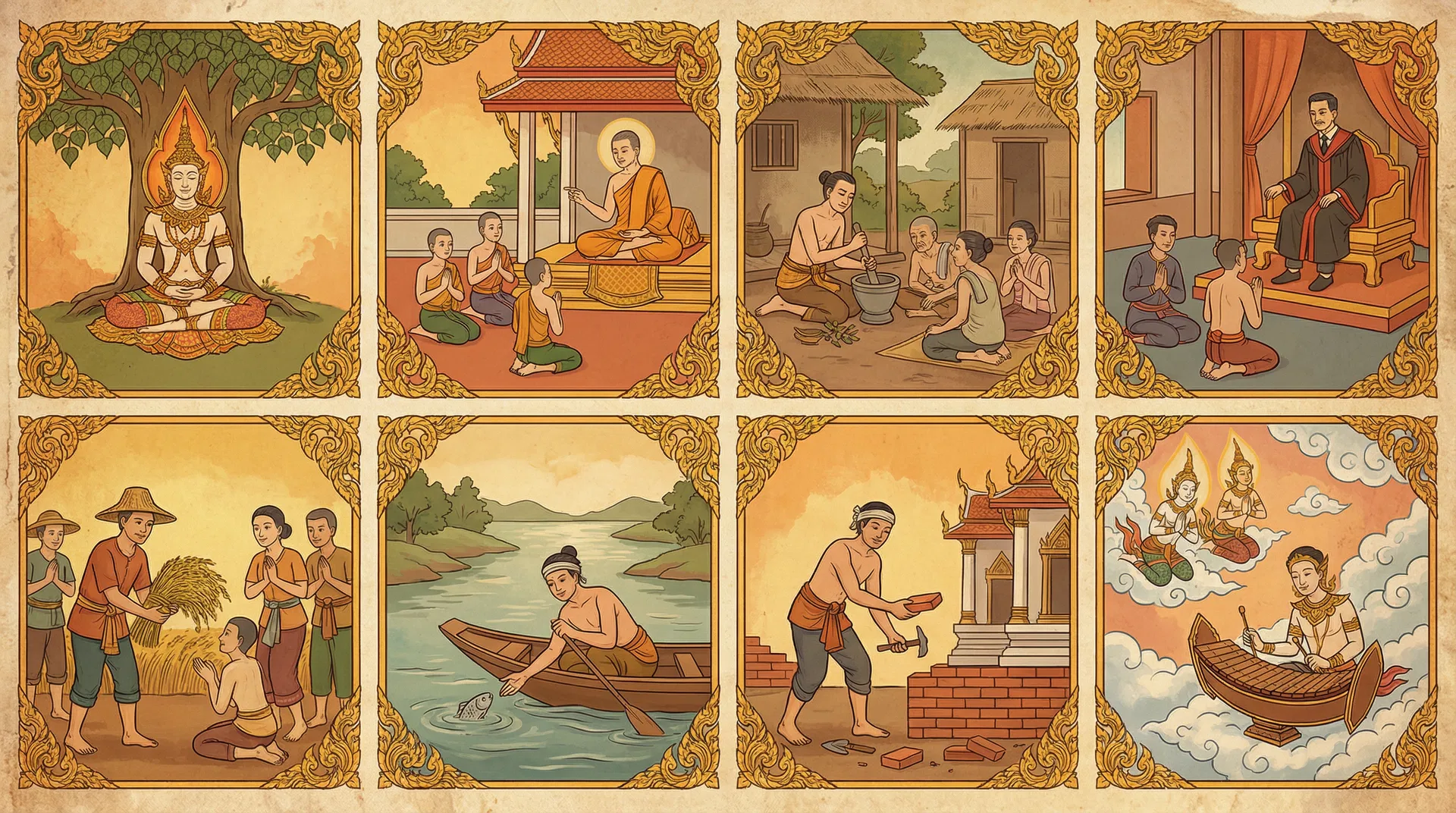 422Aṭṭhakanipāta
Sammodamāna Jātaka
Sammodamāna JātakaIn the ancient city of Varanasi, nestled beside the sacred Ganges River, lived a w...
💡 Unity, open communication, and mutual respect are the cornerstones of lasting success and true prosperity. Harmony achieved through collaboration is far more powerful than individual cunning or division.
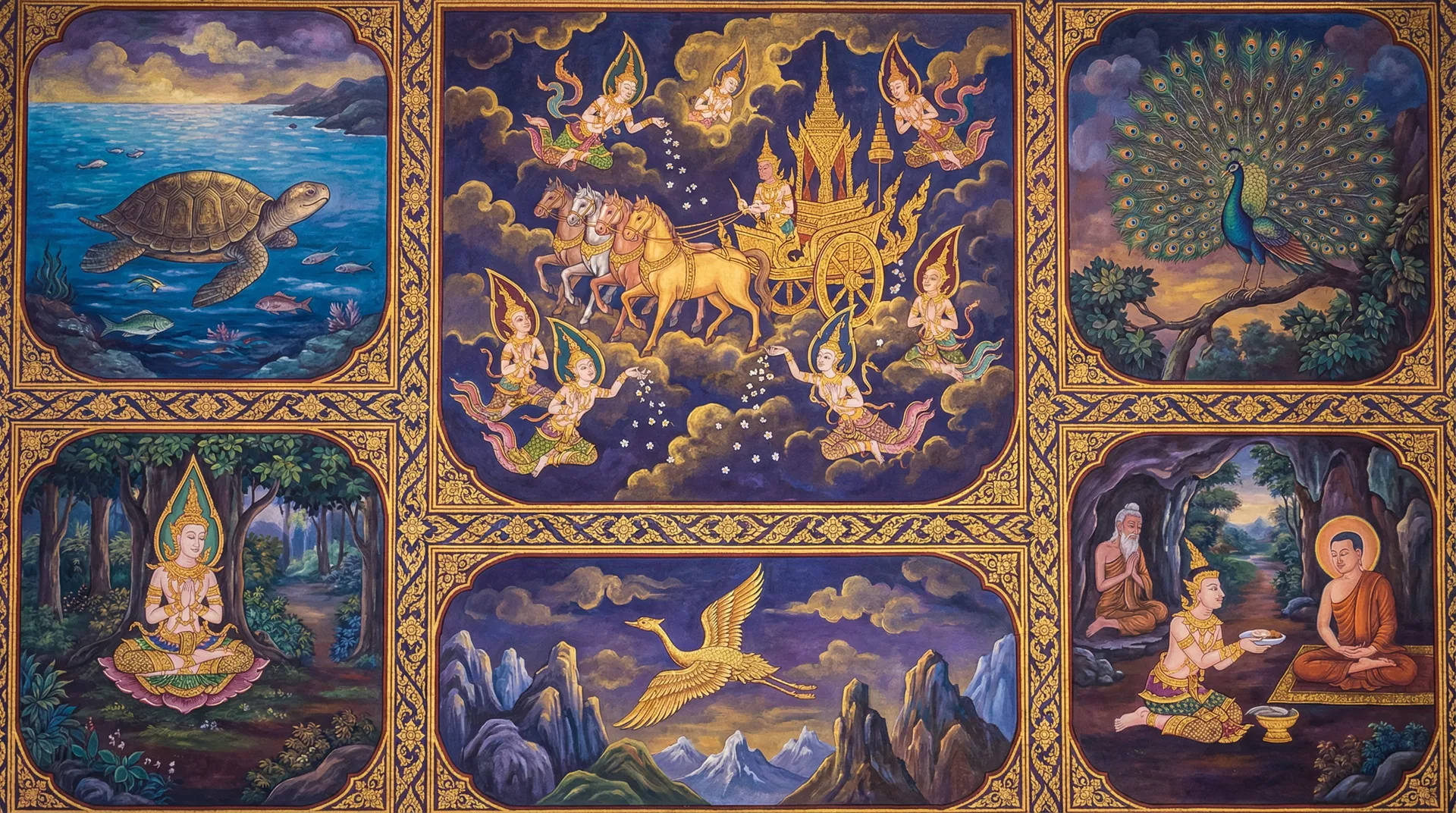 403Sattakanipāta
Maha-Ummaga Jataka
Maha-Ummaga JatakaIn the ancient kingdom of Videha, nestled beside the flowing river Candravati, lay...
💡 True wisdom lies not only in intellect but also in using that intelligence with integrity and for the welfare of others, discerning truth from deception.
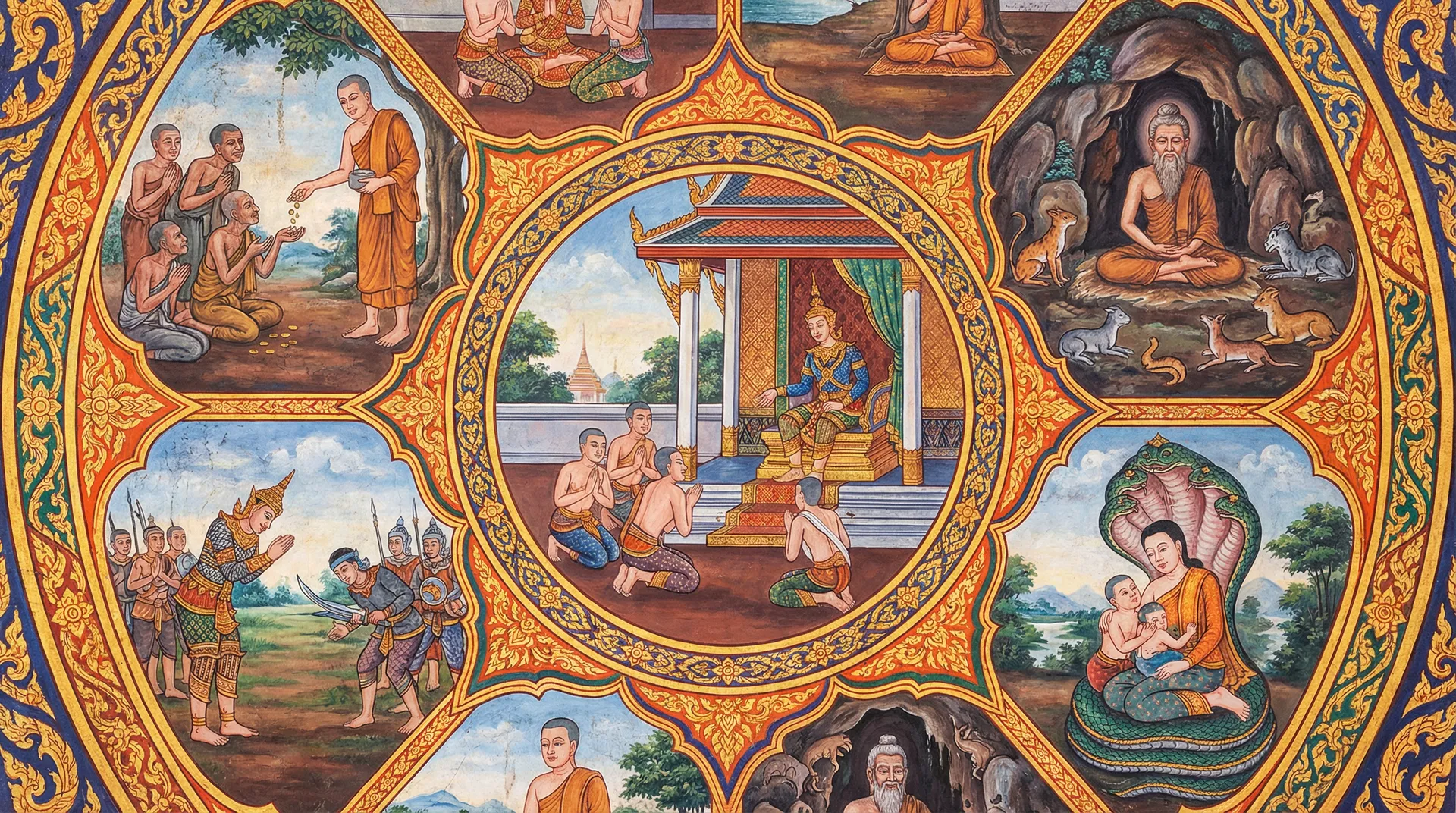 353Pañcakanipāta
Sama Jataka
Sama Jataka In the verdant foothills of the Himalayas, nestled beside a crystal-clear river, lived a...
💡 Selfless devotion, compassion, and understanding the consequences of one's actions are paramount.
411SattakanipātaGambhira-Jataka
Gambhira-JatakaIn the ancient city of Mithila, nestled amidst lush emerald forests and sparkling riv...
💡 True treasure lies not in material wealth, but in wisdom, knowledge, and inner peace. Greed blinds individuals to the real value of life, leading to suffering and dissatisfaction.
 49Ekanipāta
The Bodhisatta as the Bodhi Tree
The Bodhisatta as the Bodhi TreeIn a tranquil corner of the great forest, where the air was thick wi...
💡 True patience and generosity are unwavering, offering sanctuary and life, and inspire others to choose compassion over destruction.
— Multiplex Ad —